
Often, in the corporate environment, Emails are overlooked and the sender also overlooks the content of the mail while sending without going deep into the reasons behind sending the mail.
Many workplace problems arise due to emails. Email mistakes are difficult to correct and can be costly or damaging to your reputation.
Many times, people don’t follow certain principles of business communication and email etiquette.
Here’s the Top – Bottom Email checklist one can use before sending the email in a professional career.
1. Selecting the audience for your email
Ensure you address the right stakeholders in the To, CC & BCC field. There are some issues in using the BCC. It may question about trustworthiness. Also who have been copied will be in awkward situation.
If you want to add someone to BCC, just forward the original mail.
You can use BCC for filing copying for yourself. Also in situation when you want to send information to large groups, protecting the personal information. You can use BCC, when you don’t want someone to include you when they hit ” Reply all” button.
2. Rarely reply all in email
Try to avoid reply all at all possible time. As this will create confusion and frustration within team when they receive the emails which is not intended to them.
Also don’t put things in the mail you wouldn’t want everyone to read.
3. Choosing a subject line for your email
When someone opens the inbox and see 100’s of messages, the subject is the key thing which enables them to open the mail first. It is like the key headlines which one would skim and scan. It is the deciding factor on arriving at the priority.
Hence, one need to remember the below rules:
- Clear and concise – 5-8 keywords.
- The reader should know right away if you need something from them.
- Mention the deadline if required.
- If there is no need to open the mail, mention in short like ” Meeting moved to 4PM <EOM>.
4. Address the names and Use signature properly:
It is very important to address the name of the person correctly.
- Make sure you sure the pronoun she/her if required.
- Check the spelling twice if required.
- Sign with your preferred name.
- You can add key links of your domain as part of the signature if required.
The above details are usually overlooked.
5. Main content of the email:
Typos are the big deal in corporate communication. The below steps might help while drafting the email.
- Write the key message first.
- Add the Call to action and clearly call it out.
- Highlight the links and references.
- Double check the spelling
- Reread the message aloud.
- Keep it simple, precise and short.
- Write in passive sentences – “the document will be shared by Ram” not as “Ram has to send the document for review”. It will be like yelling at them or directing them to do something. No one likes to be micromanaged right.
- Another example when deadline is missed or any unfortunate instance in the project. Then ensure instead of “Kumar missed the deadline on the report” write it as “the deadline was missed in the project due to < reasons>”. No subject = No blame
- Avoid excessive punctuation
- Cut the clutter in the message.
- Use short sentenses. Short paragraphs.
- Clear headings and sub headings.
- Use simple language.
- Give abbreviations, buzz words.
Read your message out loud again and again. Proof read.
6. Reader-friendly email formatting:
Its very important to have readability of the mail. The below guidelines may help.
- Dont use Red font.
- Use the company’s branding colors if intended to use. Use colors appropriately.
- Use bold, italics and underline to highlight.
- Leaders can read mails in variety of devices like mobile, so ensure the position of the image if added is appropriate.
- Dont add any distracting content.
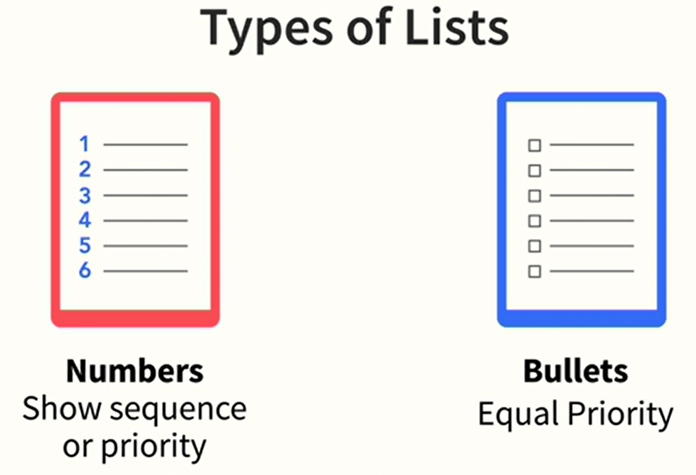
- Use bullet and numbered list when required.
- Avoid sarcasm and jokes.
- Dont assume familiarity.
- Ensure the tone is right in the mail.
7. Phrases to avoid in email:
Some of those commonly used phrases have negative associations such as below:
- Per our conversation / email – It’s basically saying, as you should know from our conversation or from my email. Instead, just answer or detail out the points calling in parenthesis about the reference dialogue.
- I’m not sure if you received my last message – This is basically saying you haven’t responded to my message in a timely manner. Beware.
- Just checking in – This also shows impatient at times. If the person has missed the deadline, send the reminder in normal tone why you need the details or require update.
- Finally, use thanks in advance sparingly. Instead use Many thanks.
8. Other common errors:
There are at times, we miss out many things while sending the mail. So far, we have seen lot many points. But the below points also as equally important and will give a negative limelight when missed to notice sending the mails. For example,
- Forgetting attachments
- Sending large files even though being aware of limit.
- Labelling attachments unclearly
- Forwarding messages without reading completely.
- Responding without reading the chain.
Hope you found the post informative. Your valuable feedback, question, or comments about this post are always welcome by leaving me message on contact form is truly appreciated.
Discover more from LR Virtual Classroom
Subscribe to get the latest posts sent to your email.
 LR Virtual Classroom