Here’s I’m summarizing the learnings of the PMO set up process from various sources. As PMOs come in varying shapes, sizes, and personalities, it was very interesting to learn from his experience. Do you know who is he?
Yes, I’m talking about the teachings of Hussain Bandukwala, Founder and Chief PMO Coach at Parwaaz Consulting. Recently I took his PMO Setup up course at Lynda.com. The course provides various templates for ready use as well.
I strongly recommend viewing the course videos for more effectiveness. Let’s begin.
PMO is an organization or say business-driven entity within a company that is performing project management activities related to tools, people, and processes.
In my experience, I have seen PMO being called “Goal Keepers”, “Standards setting body”, “Project Centre of Excellence”, “Project Governing body” etc.
It’s ensuring the project management standards and governance are set up and met for improving the quality of the project delivery over time.
PMO can be consist of PMO Leaders, PMO Managers, PMO Analysts, PMO Coordinators, or even business analysts. Project Managers are hired within the same org working in parallel in a matrix organization.
✅Set standards
✅Provide the governance
✅ Improve the quality
Success in PMO set up:
before we begin on the PMO setup, let’s know the secret behind boosting success for the PMO.
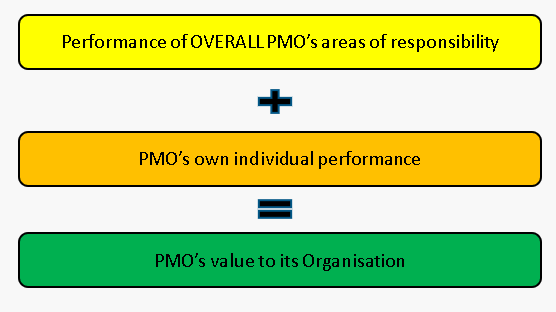
Because no matter how good your processes and tools are, if your people aren’t up to the mark, then they will lag behind in their ability to follow your robust processes and usage of your nifty tools.
In a PMO, its people are its leadership and its own personnel, which includes portfolio, program, and project managers, coordinators, and in some cases, business analysts.
All need to be strategic thinkers who are well versed in the project mgmt process.
PMO should show the below characteristics:
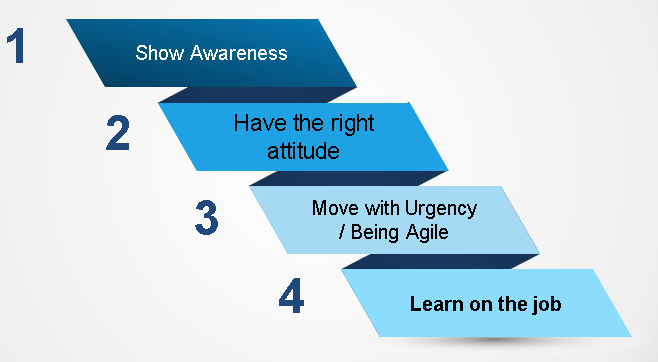
PMO’s should be comfortable in confusion and confident in executive presence. It’s important to mold and groom them.
Also, all the PMO processes should be practical, adaptable, and based on buy-in from the relevant business areas of the organization.
Additionally, PMO must tailor its tools based on the availability of technology and the new knowledge of its team members.
These tools should cover the disciplines that the PMO is working with, capture the required information accurately, and provide reporting mechanisms.
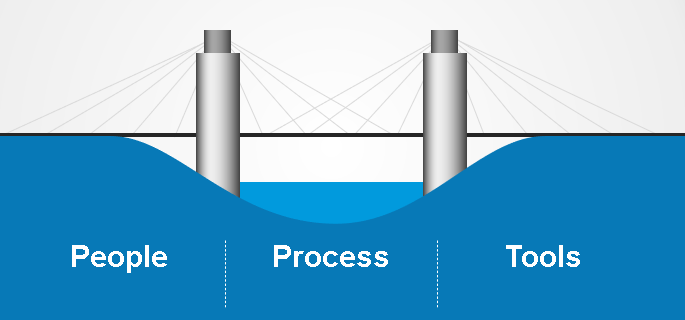
Invest your time, effort, and focus in developing these three pillars. It will pay dividends in the future.
As the great Warren Buffet said, “Someone is sitting in the shade today “because someone planted a tree a long time ago.”.
Succes Formula:
Components of a PMO:
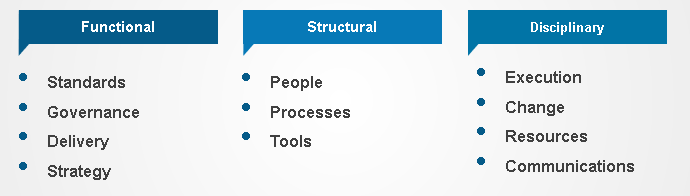
There are three components of PMO. They are,
- 1️⃣Functional (S-G-D-S)
- 2️⃣Structural (P-P-T)
- 3️⃣Disciplinary (E-C-R-C)
Types of PMO within a Set up:
There are four major sections where one can concentrate while setting up PMO. Let’s see in brief.
- Delivery PMO
- Strategy PMO
- Standards setting PMO
- Governing PMO
Delivery PMO:
PMO’s core role is to ensure delivery of the project/program or the portfolio based on its objectives.
Right from all the 10 areas of program management areas including triple constraints like Scope, Time, Cost, risk & issues and additionally quality, resources, communication, procurement, third party contracts, reports, and change management, etc, PMO will have its hands on.
It’s very important to ensure the delivery is happening by connecting the dots in all the areas of the project for successful execution by having a watchful eye.
While setting up PMO, focus on the areas which are the organization’s pain point like focusing on the project schedules, watchfully eye on the budget, deliverables, risk, and reporting so that everything else will fall in place.
PMO cannot cater to each and every discipline from the get-go.
Strategy PMO:
Under strategy PMO, one will ensure the right projects are prioritized based on the organization’s strategy and people are made accountable. This also covers the PPT trifecta at the portfolio level.
They stand for People, Process, and Tools. The maturity level of the overall PMO largely depends on these.
Be it either Portfolio Management, Program Management, or Project Management, providing predictability, and consistent services are the key.
J.P Morgan once said, “the first step towards getting somewhere, “is to decide you’re not going to stay where you are.”
The same holds true for the evolution of the PMO
J P Morgan
Standards setting PMO:
This is part of the strategy PMO but specifically calls in for setting the standards in the project management activities.
Standards in terms of templates, process, checklist, guidelines, trackers, reports, FAQ, etc. Right from scheduling, navigating risks, drafting budgets, delivering status reports, standards can be set up across the program or the portfolio.
Governing PMO
Once the standards are set up, it’s important to ensure set up governance to ensure it is being followed.
It’s very important to know the governance level if they are too tight or loose.
Covers the process, reporting mechanisms capture the right information for the right distribution. Perform constant checkups, peer reviews, and audits to check the implementation of the standards.
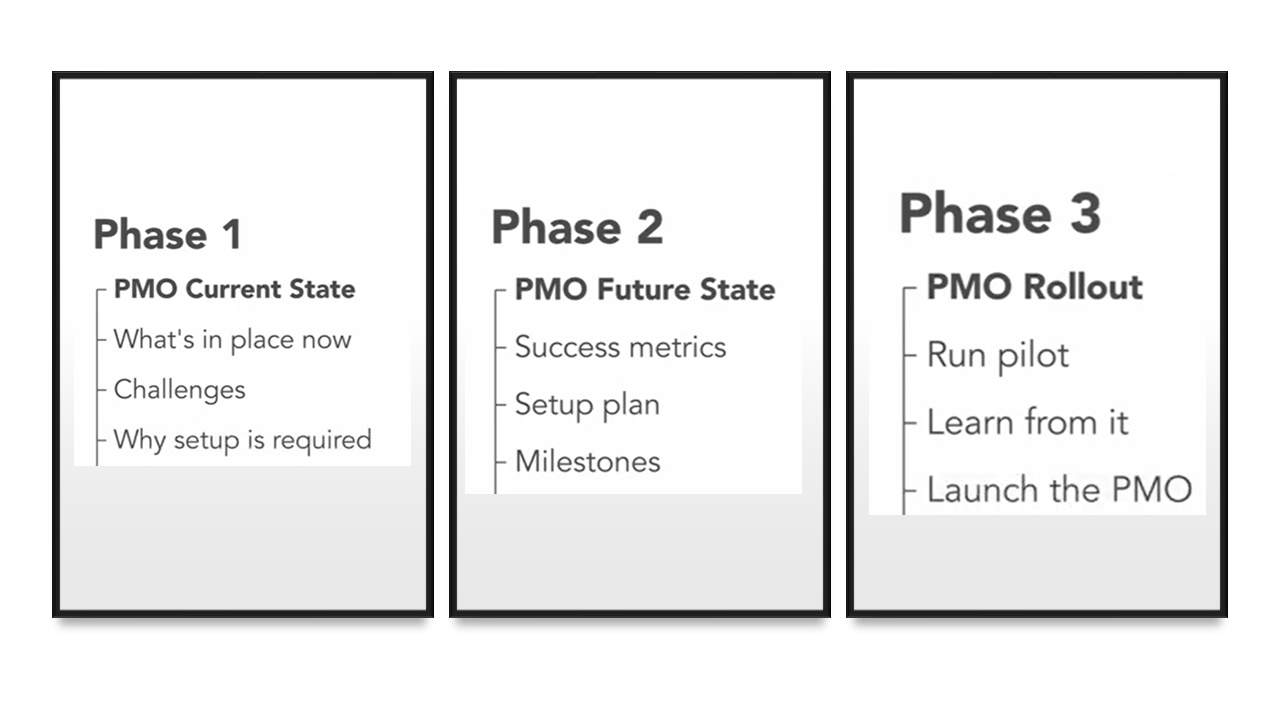
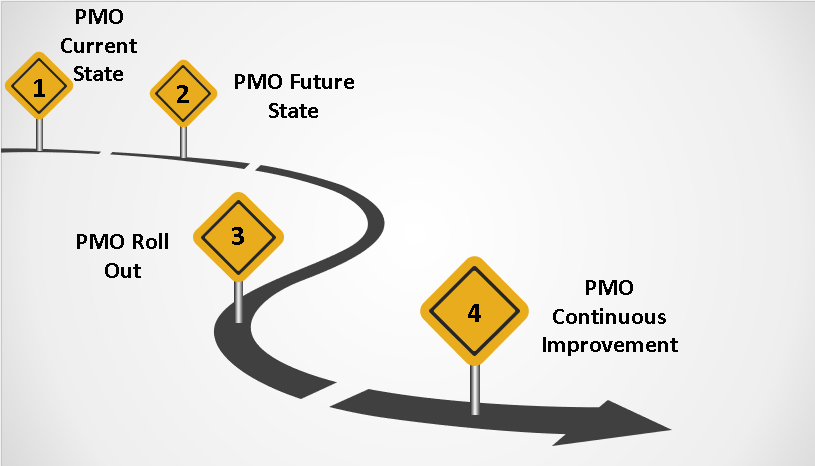
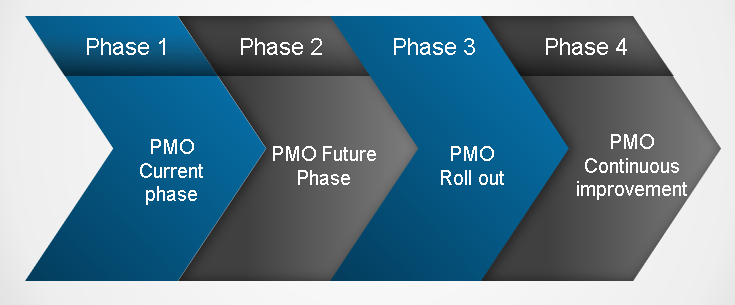
Phases in the PMO Setup:
As every journey has phases, let’s understand the details in each phase of the setup.
PMO Current Phase:
Understand the AS-IS process. Ask the below questions to understand better. It means taking a deeper look by putting your organization under the lens.
- What’s in place now?
- Why PMO is required?
- What is the charter / mission of the PMO?
- What is being delivered as part of PMO?
- What is the reach of PMO (or what should it be: department , geography) What is the process beign followed in the Overall Projects/Project Management/Prioritization
- What are the challenges? Is there a consistent way in which the projects are delivered?
- What is missing out? What are the driving factors for projects at our organization?
- Why improvement is required?
- Which is the critical area which needs attention?
- What is the existing process being followed?
- What is the compliance?
- Where is the road block?
- What is exiting RACI ( Responsible, Accountable, Consulted, Informed)?
- Who is the decision maker?
- What do you think are some of the major challenges associated with projects? Why do you think they exist? Why have they not been resolved yet?
- Identify all the disciplines the PMO is expected to address (e.g., schedule management, resource management, budget management).
Based on your findings, you can plan an elementary-level PMO and plan its maturity over time.
- ✅Map the challenges to the actions.
- ✅Estimate the length of actions.
- ✅Assign owners to activities.
If you had a magic wand, which project-related challenge would you solve? Why? How?
PMO Future Phase:
The second phase is all about the future. You can break down tasks by asking the below questions?
- What is the future state needs, aspirations, and goals?
- What is the capacity available?
- What areas involves quick wins?
- Is there any gaps in the responsibilites by carving out the scope of the PMO?]Is your PMO improving the delivery timelines?
- Is it having the business revenue and reducing the COGS?
- What is most frequently faced risks and issues?
- Domains/ areas which needs improvement?
- Where do you think we are as an organization when it comes to projects—figuring out which ones to do and do them well?
How can the team’s skills in this area
be improved?
Is there a clear career development
path for the project team?
What is the sense of urgency in
increasing the competencies of the
project management team?
Prepare a business plan by understanding each of the above and get off to the next phase.
PMO Roll Out:
Moving on to phase three, PMO Rollout. It’s all about launching the pilot, learning from it, and then rolling out the PMO.
This is where the real action happens. Run the pilot first, and after it’s done, don’t hesitate to take away any learnings from it to include in the execution of later phases.
After the pilot, move on to the full launch of the PMO according to the roadmap you created in phase two.
- Was your roadmap based on rolling out the PMO to a specific department first?
- Is there proper schedule for the roll out?
- Is there any trainings planned?
- Is all the training materials and access provided?
- Is there support team and FAQ docs created?
Once you’ve determined this, proceed to implement the rollout accordingly.
PMO Continuous Improvement:
This phase is very important as it helps to understand if the PMO is growing and staying relevant, often by repeating phases one through three regularly.
This involves the below:
- Monitoring your metrics
- Getting qualitative feedback from the stakeholders periodically.
- Share your findings with the stakeholders who are impacted by the PMO directly and indirectly.
- Publicize early success or the quick wins to the wider audience.
- Keep updating about the new improvements via the company monthly newsletter.
- Get someone else to sing your praises.
- Support your team and make sure they’re set up to do well.
Then, look at the opportunity to move on to the next step in your PMO’s evolution.
So, there you have it, the four phases involved in the setup of a PMO.
Hope you found the post informative. Your valuable feedback, question, or comments about this post are always welcome by leaving me message on contact form is truly appreciated.
Discover more from LR Virtual Classroom
Subscribe to get the latest posts sent to your email.
 LR Virtual Classroom