
Forecasting is the key to any project’s success. Project success is directly proportional to the forecasting accuracy level. Planning and Forecasting are key important activities in the project.
In project management, it can apply to hardware, resources, or even overall project budget forecast.
In this post, the below topics are covered in detail.
- What is forecasting?
- Benefits of Forecasting
- Do’s and Don’t while forecasting
- Different Types of Forecasting
What is Forecast means?
In simple layman’s terms, a forecast is a prediction of what will happen based on evidence or assumptions.
Estimation techniques are different from Forecasting Techniques
In project management, forecasting means predicting the future based on the actuals. Since all the knowns are not known ahead of time, forecasting is usually required and is a good skill to develop.
Ultimately, the project performance against the budget forecast highly determines whether your project is a success.
Benefits of Forecasting:
There are a lot of benefits to forecasting. Let’s see them one by one.
Forecasting means to lessen the uncertainty and uncertainty means variability
Own Thought
- First and foremost, it improves cash flow planning.
- Proactively identify the issues in project planning & execution and helps to take preventive action.
- Helps to reduce the resource cost which is the major chunk of cost in any project.
- Helps you to have the right resources at the right time.
- Balance the underskilled and over skilled resources.
- Improves decision-making as accurately as possible.
Do’s and Don’t while forecasting:
- Forecasts are not wild guesses. Select the right method based on the goals, data, and conditions.
- Don’t confuse the target as forecast. The budget is not the same as Forecast.
- A thorough estimation needs to be done including all the historical data points.
- All the predictions, knowledge, and assumptions are to be considered for accurate estimation.
- Don’t rely on a single source of data. Ensure sufficient data sets are considered.
- Always use real-time data.
- Collaborate and consult with all stakeholders.
- Forecasts should be done periodically.
- Ensure to use forecasting software that is available widely in the market.
- Automate your forecasting process wherever possible
- Use real-time data whenever possible.
- In forecasting, don’t expect a linear trend.
- Document the minute-level details for future reference.
- Communicate, Communicate, Communicate all the details to a wider audience to be on the same page.
The quality of the forecast and your confidence builds as your project progress.
Different Types of Forecasting:
There is no right way to forecast. You can use the best combination of the method to forecast. Let’s see the major methods of forecasting.
- Bottom-Up forecasting method
- Top-Down forecasting method
- Earned Value management
- Trend Analysis method
- Time Series Analysis method
- What-if scenarios method
Method 1: Bottom-up Forecasting
This is a more intrusive method of forecasting. It is like performing detailed planning, usually performed at the beginning of the project.
It is forecasting the smallest tasks, then combining and segregating them as a whole project.
You will break down the Work breakdown structure into the smallest level tasks and estimate the duration and cost. This is the most accurate method among the estimation techniques.
In the middle of the project, this type of forecasting is used only when the project scope is changed significantly and needs to predict as accurate data as possible.
Method 2: Top-Down Forecasting
This is high-level forecasting where the data flows from top to bottom. For example, you will first allocate the heads/managers in each vertical for the project and then move down to junior-level resources in each function.
Most of the decisions/communications are done by the top management.
Method 3: Earned Value Management
Earned Value Management (EVM) is a well-known technique to control the time and cost performance of a project. It is used to predict the final project duration and cost.
It calculates the value of work on a project. It is the ratio between earned project value and actual or expected project value.
| BAC | Budget At Completion | Total estimated budget of the project. This Value is fixed and Constant |
| EAC | Estimate At Completion | Current Estimate of the total project cost. This value keeps on changing periodically. |
| ETC | Estimate To Complete | From this point how much more the project would cost to complete |
| VAC | Variance At Completion | How much over or under budget the project would be at the time of completion. Difference between actual Budget and Planned Budget |
Method 4: Trend Analysis
This is the simplest method to predict the forecast. It will analyze the data points and find the rate of spend. It’s sometimes called “straight-line” forecasting.
The drawback of this method is that it provides a rough estimate. It doesn’t take into account actual spending that doesn’t always happen evenly over the course of a project.
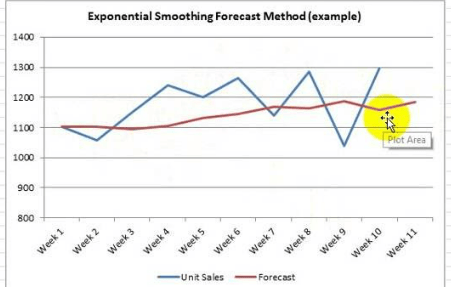
Method 5: Time series analysis
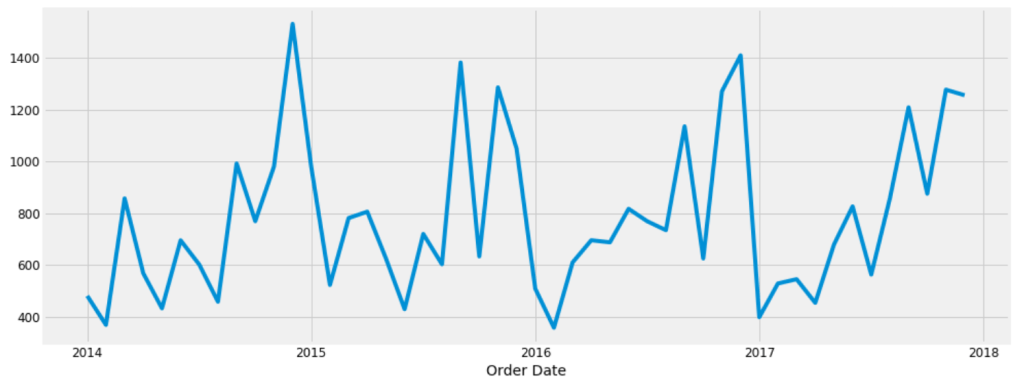
Time series analysis is a specific way of analyzing a sequence of data points collected over an interval of time. The analysis can show how variables change over time, say for example each month or every year.
While using Time series analysis, make sure you are using a large number of data points to ensure consistency and reliability.
Time Series Analysis helps in the process of identifying the common patterns in the data sets.
For example, what is the performance of the company over the period of the last 5 years?
Method 6: What-if scenarios
This is the most commonly used scheduling technique. The what-if scenario analysis evaluates different scenarios to predict the effects – both positive and negative.
It is one of the powerful techniques which shows how changes in one thing affect another.
In project management, you will analyze the project situation in terms of budget shortfalls, time overruns, or changes in technology.
Estimation techniques:
Quickly summarizing three of the estimation techniques. Top-Down and Bottom-Up are also estimation techniques.
Analogous Estimation – In this method, comparing the past projects as a baseline and then predicting the forecast of the current project. It is important to ensure the projects being compared are similar in nature.
Parametric Estimation – Uses the relationship between variables like cost per unit/cost per hour. For example, if the cost per unit is 10, then the cost per 1230 is 12300.
Three-point estimate – This method uses three important scenarios at any time Optimistic value, Pessimistic value, and most likely value.
This is the summary of forecasting. Hope it gave you a good recap. Cya in the new post soon.
Discover more from LR Virtual Classroom
Subscribe to get the latest posts sent to your email.
 LR Virtual Classroom