
PMO has to work with multiple domains and leadership. It is all about data, information management for PMO.
Most of the time, when it comes to the implementation of any new process, submission of reports, and sign-off of reviews, it is important to follow the 4-Eye principle.
It is traditionally seen that PMO is responsible for providing
- Up-to-date project data
- Correct information
- Set up new templates & dashboards
- Review mechanisms before submitting to clients
- Implementing all the corrective actions to take place.
- Process governance
But it is important to note that it is most of the time in collaboration with other domains, be it for inputs or review of outputs.
Thats the very same reason, why legal and financial documents require sign-off from two individuals.
In reviewing and proofreading, neither individual might detect all errors, but certainly, two readers are likely to miss different things. But this collaboration will catch more mistakes.
What is the 4-Eye Principle?
It is simply a process set up by having two different people to approve some type of action before it can be taken.
The Four Eyes Principle (also the Two-man rule or two-person rule) is a widely used Internal Control mechanism.
It says that any activity by an individual within the organization that involves financial-related outputs, then it must be reviewed, and double-checked by a second individual that is independent and competent.
Why the 4-Eye Principle?
The concept is simple – the probability of two different people making the same mistake at the same time is very very small.
It is a risk control method where a set of 4 eyes (or 2 people) must check or approve before being released to the wider audience.
Advantages of the Four Eye principle?
The advantages are enormous when it comes to following this principle.
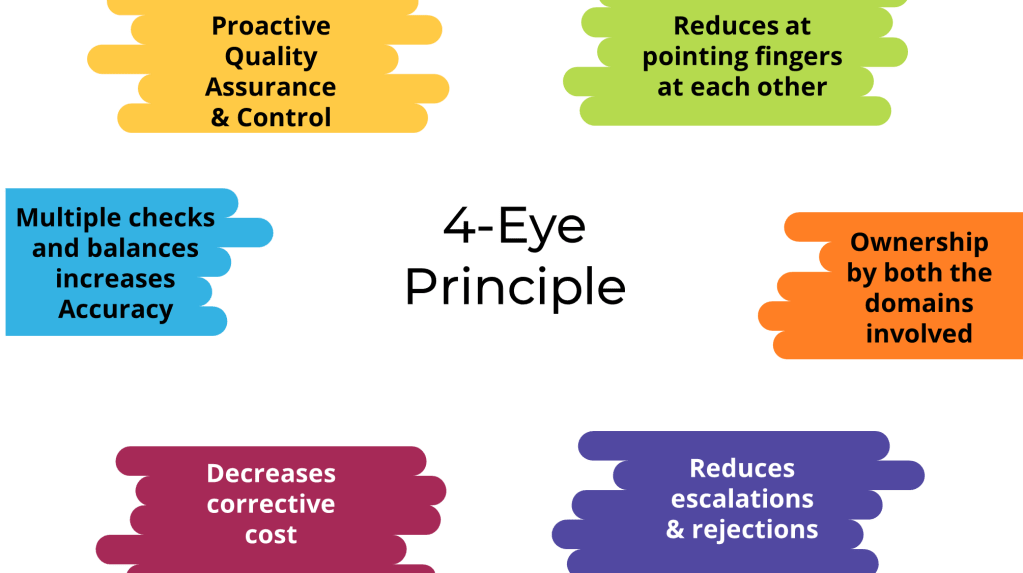
- A Series of checks and balances ensures accurate data reporting.
- Getting the right data at the time agreed by the two departments that is involved
- Reduces pointing fingers at each other (A usual blame game)
- Enforces the team to take ownership of the data.
- Proactive approach – Reduces the time for correction post-release stage.
- Internal Audit for key activities to avoid the misses
Drawback of 4-Eye Principle
Rather than calling it a disadvantage, I would say as a drawback. The reason is drawbacks can always have alternative solutions to lessen the impact.
- DRAWBACK 1: When multiple people work on the files, configuration management might be an issue and version control can cause problems.
- SOLUTION: Using Co-authoring concepts with the help of tools and technology, can help reduce this issue’s impact.
- DRAWBACK 2: 4-Eye principle can be non-value-added activity when you have multiple tasks being carried out. It is time-consuming as well as it adds additional time for the delivery.
- SOLUTION: Perform the cause and effect analysis and decide on the level of the 4-eye principle you want to implement in the activity.
Conclusion
Next time, as a PMO, when you are involved in key activities, implement the 4-eye principle and you will be amazed by the benefits during the process.
Discover more from LR Virtual Classroom
Subscribe to get the latest posts sent to your email.
 LR Virtual Classroom